Proudly serving Phoenix, Mesa, Scottsdale, Tempe, Chandler, Glendale & surrounding areasCall or Text 24/7: 480-300-4493
Aerial drone view of a residential neighborhood with Saguaro cacti and stucco homes in Phoenix, AZ.

Commercial HVAC Services and Repairs in Surprise, AZ

Phoenix Commercial HVAC provides commercial HVAC repair, installation and replacement, maintenance, rooftop unit service, and commercial refrigeration for businesses in Surprise, Arizona. Our commercial scope also includes ductwork, building automation and HVAC controls, indoor air quality, VRF service, and restaurant kitchen ventilation. We work with offices, retail centers, restaurants, warehouses, and light industrial facilities across the supported West Valley footprint. Property managers can request a free commercial HVAC estimate for service planning, repairs, or equipment projects.

Surprise summers can hold ambient temperatures at 110°F or higher for weeks, while pavement and roof-membrane temperatures climb well past 150°F. Sustained heat strains compressors, contactors, gaskets, coils, and lubricants on rooftop equipment. Monsoon dust can also restrict condenser airflow and raise head pressure quickly. Our local process combines desert-specific diagnostics with a written scope and cost estimate before repair work begins.

Phoenix Commercial HVAC is a family-owned West Valley company that documents diagnostic readings and equipment history to help property teams recognize recurring problems.

★ ★ ★ ★ ★4.9/5.0 Customer Rating - 31 Years of HVAC Experience - Thousands of Commercial Systems Serviced - Licensed, Bonded & Insured - Serving Commercial & Industrial Properties
Commercial HVAC Services

Commercial HVAC Services in Surprise, AZ

Surprise grew from 30,848 residents in 2000 to 143,148 at the 2020 census, producing a mix of newer commercial construction and older facilities along Bell Road, Grand Avenue, and the Loop 303 corridor. We service properties around the downtown core, Marley Park, Surprise Farms, Asante, Sierra Montana, Prasada, Rancho Gabriela, Surprise Stadium, and Surprise Municipal Airport. Multi-location coverage extends through the West Valley, including Sun City West, El Mirage, Youngtown, Waddell, northern Peoria, and Avondale, AZ .

Commercial HVAC Repair
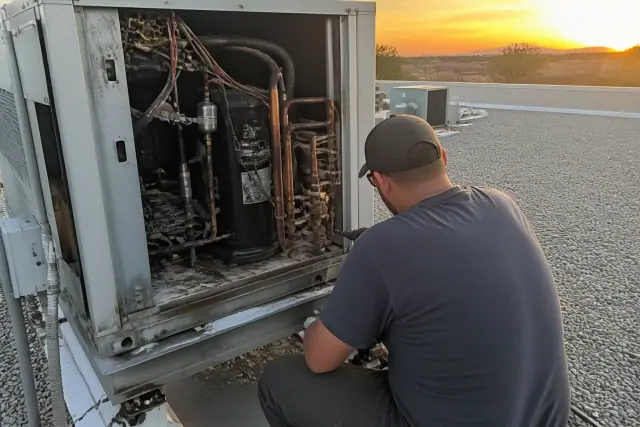
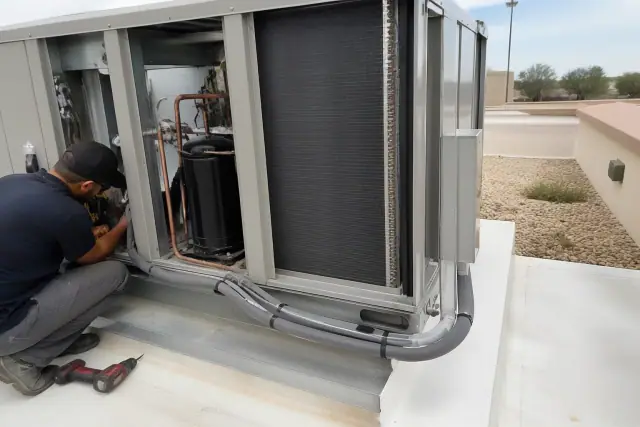
HVAC technician performing a seasonal repair on a rooftop unit in Surprise, AZ.

We diagnose compressor failures, refrigerant leaks, electrical faults, and control-board issues on packaged units, split systems, and VRF equipment. When a system trips on a 112°F afternoon, a written diagnosis explains the recommended repair before work begins.

Explore Service
Commercial HVAC Installation & Replacement

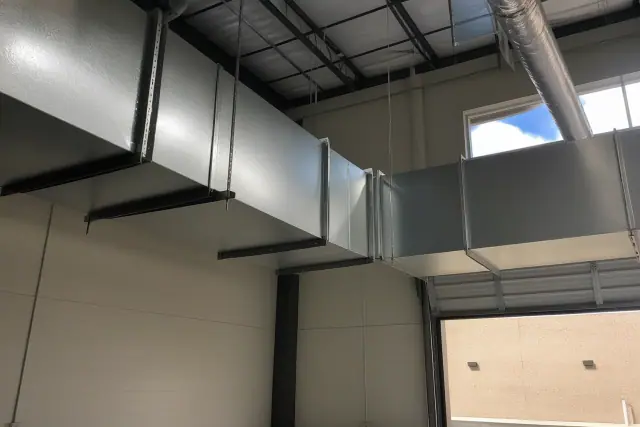
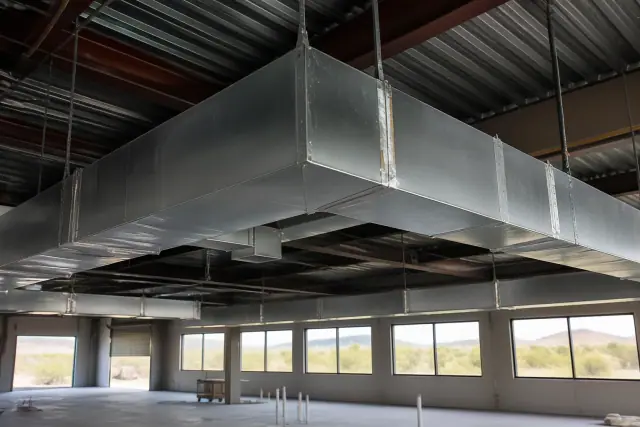
Galvanized steel ductwork installed on a warehouse ceiling in Surprise, AZ.

For new construction and retrofits, we use Manual N-based load calculations instead of rule-of-thumb sizing. Our team coordinates City of Surprise permits and inspections under the International Mechanical Code adopted statewide, then commissions airflow, refrigerant charge, and control sequences against design specifications.

Explore Service

Commercial HVAC Maintenance

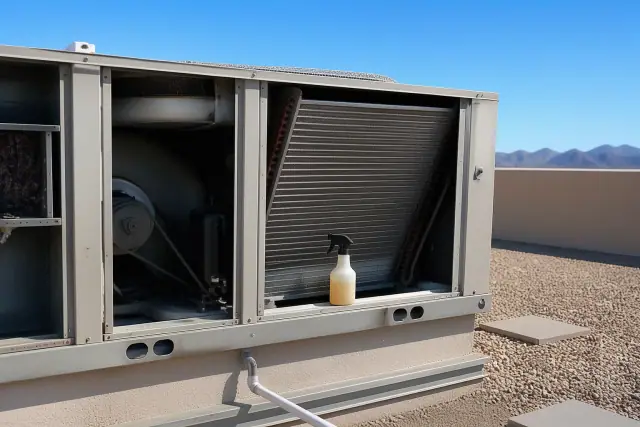
Technician performing seasonal maintenance on a commercial rooftop HVAC unit in Surprise, AZ.

Maintenance visits cover coil cleaning, refrigerant checks, belt and bearing inspection, electrical tightening, condensate drains, and control calibration. Recorded readings create a service history that can reveal developing problems before a mid-summer failure.

Explore Service

Rooftop Unit (RTU) Service & Replacement

Technician performing a seasonal HVAC rooftop unit tune-up on a commercial building in Surprise, AZ.

We inspect economizer dampers, condenser coils, belt-drive blowers, gaskets, and cabinets on packaged rooftop units exposed to direct sun and dust. For aging equipment, we apply the $5,000 rule and lifecycle-cost review before recommending repair or a crane-set replacement with curb adapters and electrical reconnects.

Commercial Refrigeration

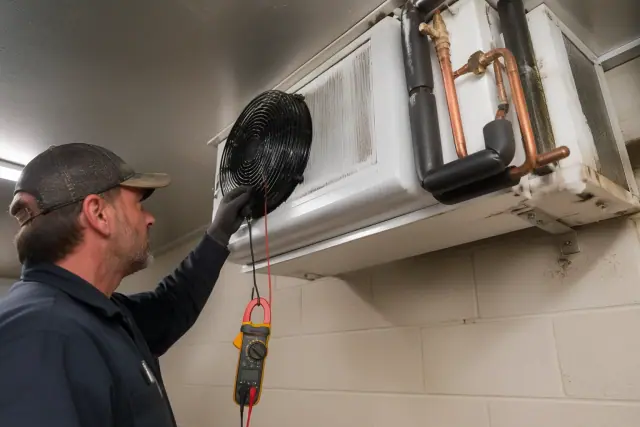
Mechanic testing an evaporator coil fan motor inside a walk-in commercial refrigerator in Surprise, AZ.

We service walk-in coolers, walk-in freezers, and reach-in refrigeration for restaurants, grocery retailers, and convenience stores. Diagnostics cover evaporator icing, compressor short-cycling, and door-gasket failures.

Commercial Ductwork

Galvanized steel ductwork installation suspended from an industrial ceiling in Surprise, AZ.

We fabricate and install sheet-metal ductwork, test static pressure, and seal joints where conditioned air is being lost. Addressing leaky or undersized ducts is especially important when a building is already working against sustained Surprise heat.

Building Automation & HVAC Controls

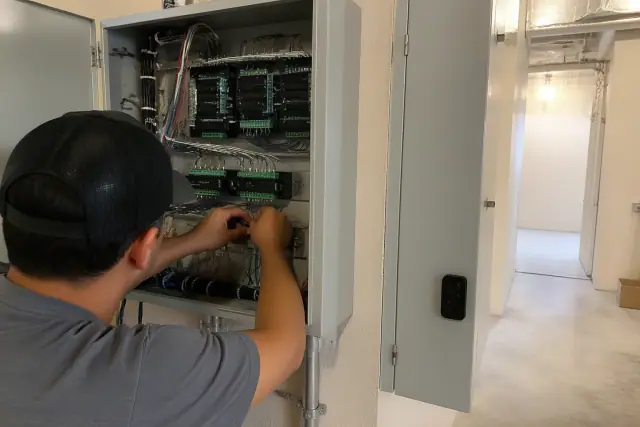
Technician wiring a building automation control cabinet with colorful low-voltage cables in Surprise, AZ.

Building automation platforms bring rooftop units, VRF systems, and zone dampers into one interface. We install and program DDC controls, commercial thermostats, schedules, and setback sequences to reduce simultaneous heating and cooling conflicts and match actual occupancy.

Commercial Indoor Air Quality

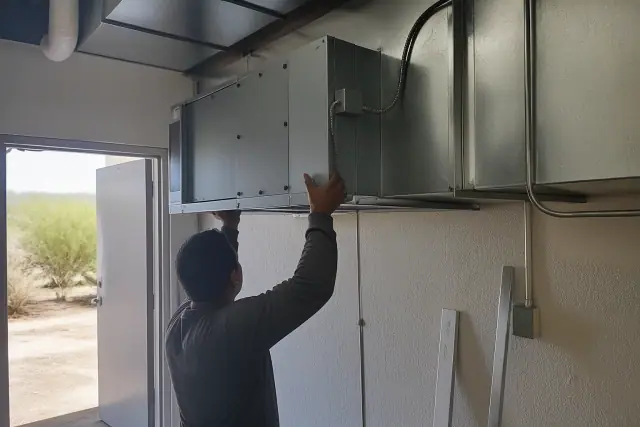
A contractor installing a commercial air purification unit into ductwork in a mechanical room in Surprise, AZ.

Commercial indoor air quality work focuses on filters, airflow, and humidity control in dust-exposed buildings. We address dust intrusion at filter racks and economizer dampers, and commission evaporative pre-cooling or humidity controls so office and retail interiors are not over-dried.

VRF System Service

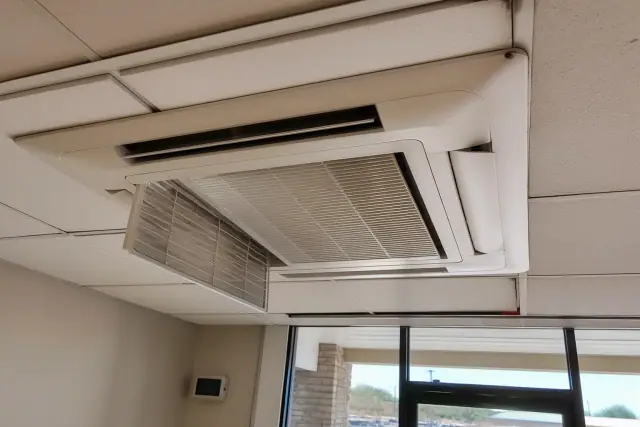
Ceiling-mounted VRF unit with a cleaned filter and access panel in a commercial office space in Surprise, AZ.

We service inverter-driven VRF systems, including refrigerant-piping diagnostics, branch-controller faults, and outdoor-unit compressor issues. Ductless VRF and split-system configurations can provide independent temperature control for tenant-improvement spaces, additions, small offices, server rooms, and specialty retail spaces.

Restaurant HVAC & Kitchen Ventilation

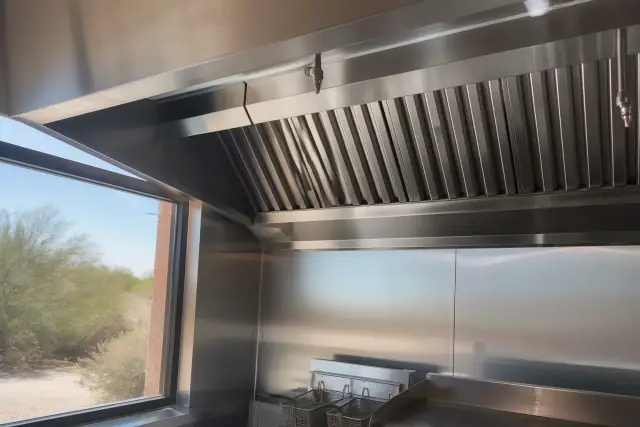
Stainless steel commercial kitchen HVAC ventilation installation in Surprise, AZ.

We service kitchen ventilation, exhaust fans, and makeup air units for Surprise restaurants. Correctly balanced makeup air and exhaust help hood-suppression systems operate properly while keeping kitchen conditions manageable, and service can be coordinated with hood-cleaning schedules.

System Planning

How to Choose the Right Commercial HVAC Strategy

The right approach depends on building use, occupancy, glass load, kitchen exhaust, existing ductwork, zoning, and equipment history. Because Surprise's cooling season effectively stretches from March through October, selection should account for annual compressor hours as well as initial equipment cost.

Manual N Load Calculations

Manual N commercial load calculations account for occupancy, glass load, envelope conditions, and kitchen makeup air before equipment tonnage is selected. This avoids undersizing that short-cycles under desert load and oversizing that wastes energy or complicates humidity control.

Equipment Lifecycle Review

Equipment age, repair history, operating hours, and lifecycle cost should guide the repair-versus-replacement choice. A unit with recurring faults needs a different plan from maintainable equipment with stable readings and a documented history.

Refrigerant Compatibility

Equipment selection and repair planning should account for the ongoing R-410A to R-454B refrigerant transition under the EPA AIM Act. Refrigerant availability and compatible components can change the long-term value of repairing older equipment.

Desert-Duty Components

Cabinets, seals, coils, lubricants, contactors, and fan components should be evaluated for sustained rooftop heat and dust exposure. Temperate-climate assumptions do not reflect the operating load faced by Surprise commercial equipment.

Building Use and Zoning

A Bell Road restaurant with exhaust makeup air, a Loop 303 retail space with high glass load, and a Marley Park office do not share the same load profile. System type, zoning, and controls should follow the building's actual operation.

Efficiency and Service History

Energy-efficient upgrades can reduce consumption by 20% to 50%, depending on the age of the equipment being replaced. Documented readings and a service history make it easier to identify which improvements address recurring load or control problems.

Surprise HVAC Challenges

Common Commercial HVAC Problems in Surprise

Commercial HVAC failures in Surprise often begin with heat, dust, airflow restriction, electrical wear, refrigerant problems, or aging equipment. Early diagnosis can separate a cleanable or repairable fault from a system that needs a broader lifecycle review.

Request HVAC Estimate

Extreme Rooftop Heat

Between June and September, summer highs regularly reach triple digits, and rooftop surfaces may run 40 to 50 degrees hotter than ambient air. That exposure accelerates gasket, seal, and lubricant breakdown in condensing equipment.

Dust-Loaded Condenser Coils

Monsoon season, roughly July through September, can load condenser coils with fine dust and haboob debris in hours. Restricted airflow and elevated head-pressure faults are especially common when coils have not been cleaned in the prior six months.

Refrigerant and Compressor Faults

Low charge, refrigerant leaks, TXV faults, and marginal compressors can produce poor cooling, trips, and short-cycling. Diagnosis should include refrigerant charge, superheat, subcooling, and compressor amp draw rather than guesswork.

Electrical and Control Failures

Cracked contactors, weak capacitors, condenser-fan motors, low-voltage wiring, control boards, and mismatched thermostats can interrupt operation or create zone conflicts. Testing isolates the failed component before parts are replaced.

Restricted Airflow and Duct Leakage

Dirty filters, packed coils, stuck economizer dampers, leaking sheet-metal joints, and undersized ducts all reduce delivered airflow. Static-pressure testing helps distinguish a duct problem from a refrigeration or blower fault.

Aging Desert-Worn Equipment

Sustained heat and dust can shorten Arizona equipment life below national expectations. A documented service history shows recurring failures and trend data that support a repair or replacement decision.

Why Choose Us

Why Choose Phoenix Commercial HVAC in Surprise?

Phoenix Commercial HVAC combines West Valley field experience with commercial diagnostics, permitting coordination, and documented work. The focus is on matching repairs and equipment decisions to Surprise's heat exposure, building use, and operating history.

Surprise Permit Coordination

For installations and replacements, we pull permits through the City of Surprise building department and coordinate inspections under the state's adopted mechanical code. Local familiarity helps keep required paperwork and commissioning aligned with the project.

Licensed and Certified Work

The company operates as a licensed commercial HVAC contractor under Arizona Registrar of Contractors oversight, and technicians carry EPA Section 608 certification for refrigerant handling under the Clean Air Act. Those credentials matter for refrigerant diagnostics, repair, and compliant equipment work.

Written Scopes and Service Records

Diagnostics, readings, written scopes, and cost estimates are documented before work moves forward. As a family-owned West Valley company, Phoenix Commercial HVAC keeps equipment history available so recurring issues can be recognized faster.

A Clear Service Process

Our Commercial HVAC Service Process in Surprise

Commercial repair, maintenance, and replacement work follows a six-step process that moves from building context to documented results. The exact tests and scope vary by equipment type and the issue found.

01.

Review the Building and Equipment

We review building use, operating schedule, comfort complaints, equipment type, and available service history before testing.

02.

Inspect and Measure

Technicians check filters, airflow across coils, refrigerant charge, superheat, subcooling, electrical connections, and amp draws on compressors and fan motors.

03.

Explain the Diagnosis

We identify the fault, separate immediate repair needs from longer-term risks, and provide a written diagnosis.

04.

Provide the Scope and Estimate

A written scope and cost estimate outline the recommended work before repair begins, so the property team can review the approach.

05.

Complete and Commission the Work

Approved repairs, maintenance, or installations are completed with the relevant mechanical, electrical, airflow, and control work. Installations are commissioned against design specifications.

06.

Document Final Readings

Final readings and completed work are added to the equipment service history, allowing future visits to compare trends, including performance at 110°F ambient versus 85°F conditions.

Commercial Property Priorities

HVAC Priorities for Surprise Facilities & Businesses

Case Study 1: Offices & Retail: Comfort zoning, airflow correction, and controls programming can reduce hot spots and simultaneous heating-and-cooling conflicts.

Case Study 2: Restaurants & Refrigeration: Balanced exhaust and makeup air, plus walk-in and reach-in refrigeration service, support kitchen operations and product-temperature control.

Case Study 3: Warehouses & Light Industrial: Load calculations, rooftop-unit planning, and scheduled maintenance address large spaces, long operating hours, and higher-capacity equipment needs.

Request an Estimate

Plan Commercial HVAC
Service in
Surprise

Tell us whether you manage an office, retail center, restaurant, warehouse, or light industrial facility and what the system is doing. Phoenix Commercial HVAC can arrange a diagnostic visit or discuss a free estimate for supported commercial work in Surprise and the West Valley.

Surprise Commercial HVAC Help

FAQs About Commercial HVAC in Surprise, AZ

These answers cover commercial repair, maintenance, replacement, controls, refrigeration, ductwork, and desert operating conditions. Call to discuss the equipment and symptoms at your Surprise property.

Call Our HVAC Team

Average commercial HVAC repair costs run $243 to $1,567, depending on the failure. Phoenix Commercial HVAC provides a written diagnosis and cost estimate before repair work begins.

Commercial maintenance typically runs $0.15 to $0.30 per square foot annually. Preventive programs are 20-40% more cost-effective over equipment life than reactive repair-only approaches, with the actual visit scope based on the facility and equipment.

Most Arizona AC units last 10 to 15 years on average, compared with a 15-20 year national average. Commercial systems maintained on a disciplined preventive schedule can reach 20-25 years, although heat, dust, operating hours, and equipment condition affect the result.

The maintenance checklist includes coil cleaning, condensate-drain clearing, refrigerant checks, belt and bearing inspection, contactor and capacitor testing, electrical tightening, and control calibration. Readings are documented so future visits can track equipment trends.

Confirm the thermostat or building-automation setpoint, inspect filters for restriction, verify the disconnect switch and breaker are engaged, and listen for unusual compressor or blower noise. Refrigerant diagnostics and electrical testing should be left to licensed technicians with the proper gauges and meters.

The decision should weigh equipment age, repair history, current failure cost, energy use, and expected remaining life. Phoenix Commercial HVAC uses the $5,000 rule and a full lifecycle-cost review before recommending replacement.

We use Manual N-based commercial load calculations that account for occupancy, glass load, building conditions, and uses such as kitchen exhaust makeup air. The installation is then commissioned to verify airflow, refrigerant charge, and control sequences against design specifications.

Fine dust and haboob debris can pack condenser coils, restrict airflow, and elevate head pressure. Dust can also affect economizer dampers and filter racks, which is why local equipment may need more frequent cleaning and filter changes.

Service covers packaged RTU diagnostics, repair, maintenance, and replacement. Checks can include economizer dampers, condenser coils, belt-drive blower assemblies, gaskets, cabinets, controls, and the electrical reconnects involved in a replacement.

Yes. The scope includes walk-in cooler repair, walk-in freezer service, and reach-in refrigeration for restaurants, grocery retailers, and convenience stores, including evaporator icing, compressor short-cycling, and door-gasket faults.

Yes. A building automation platform can monitor rooftop units, VRF systems, and zone dampers from one interface, while DDC sequences and setback schedules align operation with occupied hours.

Yes. VRF service includes refrigerant-piping diagnostics, branch-controller faults, and inverter-driven outdoor-unit compressor issues. Ductless VRF and split systems can also support tenant improvements, additions, server rooms, and specialty retail spaces.

Yes. Commercial ductwork service includes sheet-metal fabrication and installation, static-pressure testing, and joint sealing. The evaluation looks for leakage, undersizing, and airflow restrictions that waste conditioned air.

Coverage includes Surprise's downtown core and named neighborhoods, plus Sun City West, Sun City Grand, El Mirage, Youngtown, Peoria, Waddell, Glendale, and parts of Litchfield Park and Goodyear. Larger commercial and industrial projects can also be scheduled elsewhere in Maricopa County, including areas near Wittmann.

The refrigerant transition may affect future availability and repair planning for older systems. Equipment compatibility, component availability, and lifecycle cost should be reviewed before choosing repair or replacement, and certified technicians should handle refrigerant work.