Proudly serving Phoenix, Mesa, Scottsdale, Tempe, Chandler, Glendale & surrounding areasCall or Text 24/7: 480-300-4493
Aerial drone view of a residential neighborhood with Saguaro cacti and stucco homes in Phoenix, AZ.

Commercial HVAC Maintenance Programs & Equipment Inspections in Phoenix, AZ

Phoenix Commercial HVAC provides commercial HVAC maintenance, repair, installation, and replacement for offices, retail centers, warehouses, restaurants, and other commercial properties in Phoenix, Arizona. Our technicians also service rooftop units, commercial refrigeration, ductwork, building automation and controls, indoor air quality equipment, and multi-zone VRF systems. Maintenance scopes are built around equipment type, run hours, occupancy, and the operating risk at each property. After a site walk, we provide a written estimate based on the actual equipment count and condition.

Summer rooftop temperatures on Phoenix commercial buildings routinely exceed 150 degrees, and cooling loads can run from March through October. Dust, UV exposure, and constant heat cycling accelerate wear on coils, seals, electrical components, and blower assemblies. Monsoon humidity in July and August also challenges evaporator coils and drain pans, while winter mornings in the Salt River Valley can dip into the 40s and cycle dormant heating components. Year-round inspection, cleaning, testing, and calibration help expose these conditions before they become peak-load failures.

Our technicians work under Arizona Registrar of Contractors licensing, hold EPA Section 608 certification for refrigerant handling, and use ACCA Manual N and Manual D protocols where load calculations or duct design are involved. Maintenance programs are calibrated to ASHRAE 180 guidance and supported by measurements such as superheat, subcooling, amperage draw, and static pressure.

Phoenix Commercial HVAC provides commercial HVAC maintenance throughout Phoenix and nearby Tempe, Scottsdale, Mesa, Chandler, and Glendale, as well as the broader Maricopa County metro area.

★ ★ ★ ★ ★4.9/5.0 Customer Rating · 31 Years of HVAC Experience · Thousands of Commercial Systems Serviced · Licensed, Bonded & Insured · Serving Commercial & Industrial Properties

Commercial HVAC Maintenance Benefits

What Is Commercial HVAC Maintenance?

Commercial HVAC maintenance is a planned program of inspection, cleaning, testing, adjustment, and documentation for the equipment that heats, cools, ventilates, and supports a commercial property. The scope can include rooftop package units, split systems, VRF equipment, refrigeration, ductwork, thermostats, and building controls.

In Phoenix, the calendar should follow the load on the equipment. Pre-summer tune-ups in February and March focus on refrigerant charge and condenser-coil cleaning, while fall visits address heating components, belts, and bearings before colder mornings return.

Inspection frequency is selected using equipment type, criticality, age, run hours, and occupancy rather than one generic interval. Filter changes are also based on MERV rating and measured loading instead of a blanket 90-day rule, helping keep static pressure within range.

Benefits of Preventive HVAC Maintenance

A consistent maintenance plan gives facility teams trend data and scheduled opportunities to correct wear before the next high-load period. It also connects mechanical condition, airflow, controls, and operating cost instead of treating each service call as an isolated event.

  • Properly maintained systems in Phoenix typically use 15-20% less energy than poorly maintained equipment.
  • Coil cleaning and correct refrigerant charge support cooling capacity during peak demand.
  • Filter management protects blower motors and helps keep static pressure in range.
  • Contactor, capacitor, belt, and bearing checks reveal wear before a shutdown.
  • Drain-pan and condensate service reduces water problems during monsoon humidity.
  • Controls calibration limits unnecessary runtime during unoccupied hours.
  • Recorded amperage, pressure, and airflow readings make performance changes easier to spot.
  • Preventing premature compressor failure helps equipment reach its expected 10-15-year service life.
Phoenix Commercial HVAC Services

Commercial HVAC Maintenance Services

Our commercial service scope combines preventive care with the specialized work Phoenix facilities need when testing uncovers a fault or aging equipment reaches a decision point. Each category can be coordinated around one building, one rooftop unit, or a portfolio of properties.

Preventive Maintenance Plans

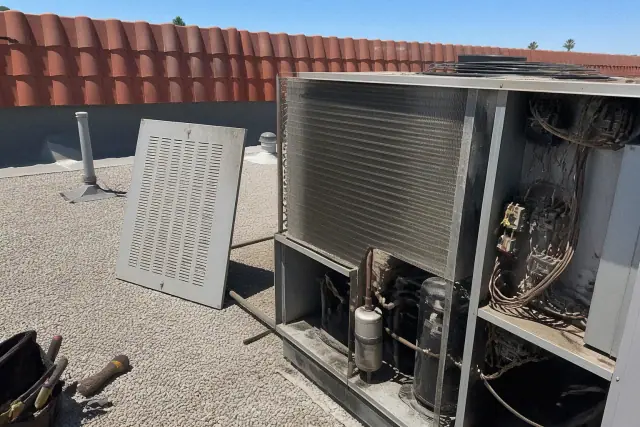
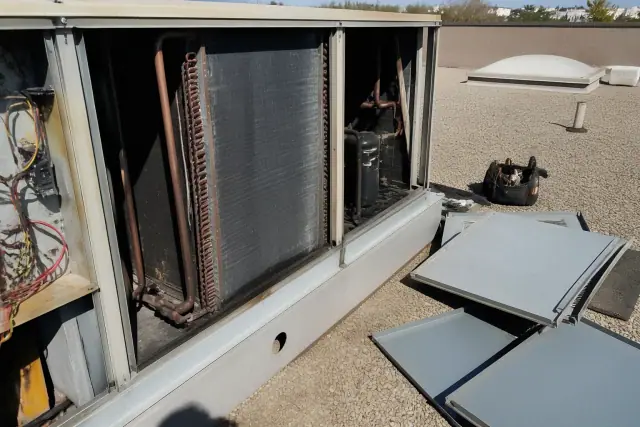
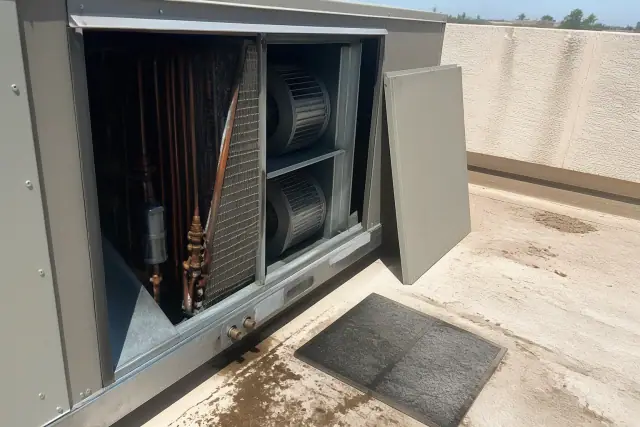
Industrial HVAC unit with open access panel and copper coils on a sunny rooftop in Phoenix, AZ.

Scheduled maintenance visits cover cleaning, filter inspection or replacement, refrigerant checks, electrical testing, belts, bearings, condensate drains, thermostats, and controls. Plans can use monthly inspections, seasonal tune-ups, or quarterly service based on equipment criticality and operating conditions.

Request Estimate

Rooftop Unit Service and Replacement

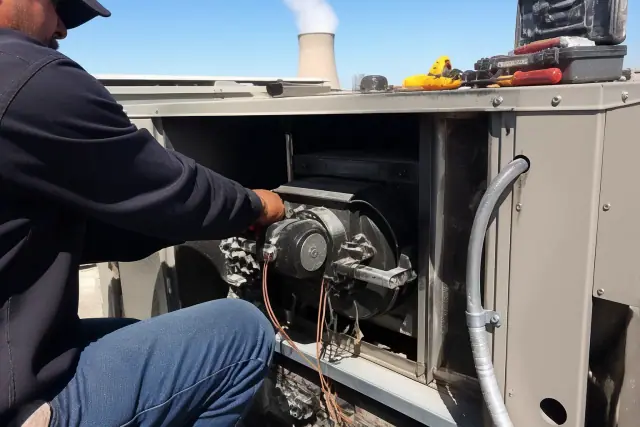
Technician performing a commercial HVAC rooftop unit tune-up on a gravel roof in Phoenix, AZ.

Rooftop service addresses condenser coils, cabinet seals, curb flashing, capacitors, contactors, compressors, and direct exposure to sun and dust. When an RTU is past 10-12 years old and faces a second major repair, we compare the repair cost with replacement options instead of assuming another repair is the right answer.

Request Estimate

Commercial HVAC Repair

Technician performing a seasonal HVAC maintenance tune-up on a rooftop unit in Phoenix, AZ.

Commercial cooling and heating repairs begin with amp draws, refrigerant pressures, electrical connections, control-board fault codes, and other root-cause checks. Phoenix Commercial HVAC provides 24/7 commercial repair plus same-day and weekend service for failures that put offices, restaurants, data closets, or walk-in coolers at risk.

Request Estimate

Commercial HVAC Installation

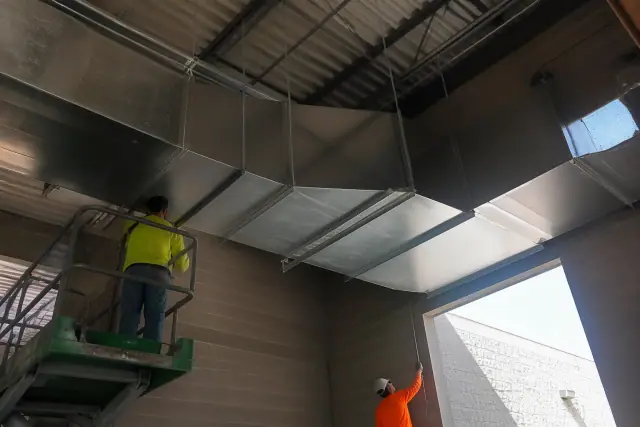
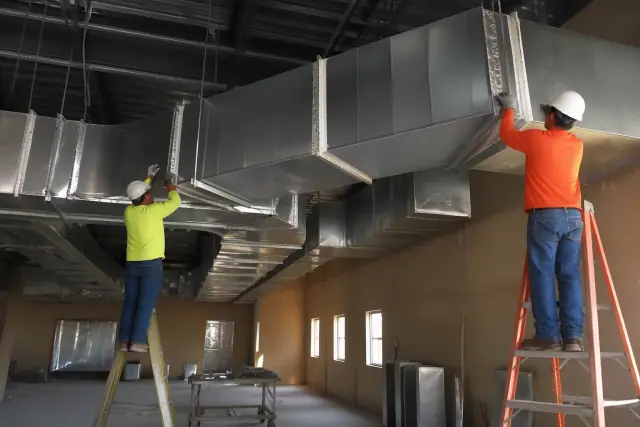
Sheet metal workers installing galvanized steel HVAC ductwork in a Phoenix, AZ industrial warehouse.

Installation starts with an ACCA Manual N load calculation that considers glazing, occupancy, kitchen heat gain, and roof insulation instead of a square-footage shortcut. Equipment is installed to manufacturer requirements, permitted through the relevant municipal department, and commissioned against airflow, charge, and control sequences so it can perform on a 115-degree day.

Request Estimate

Commercial Refrigeration and Kitchen Ventilation

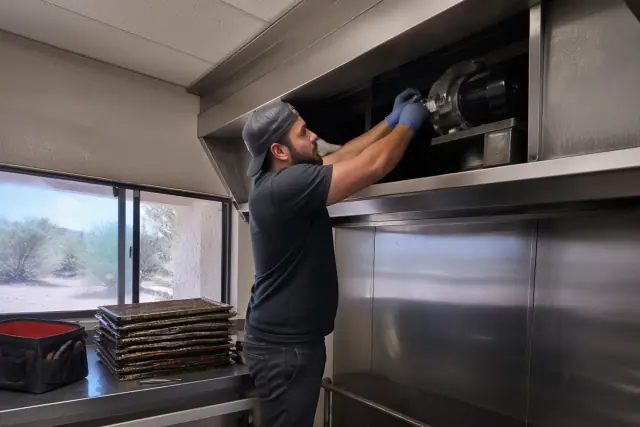
Technician inspecting a commercial kitchen exhaust hood and grease filters at a job site in Phoenix, AZ.

We service walk-in coolers, freezers, and reach-in refrigeration alongside restaurant HVAC and kitchen ventilation. Exhaust-hood cleaning schedules, grease-exhaust requirements under NFPA 96, and makeup-air balancing are coordinated with the needs of Maricopa County Environmental Services and local fire-marshal inspections.

Request Estimate

Building Automation and Controls

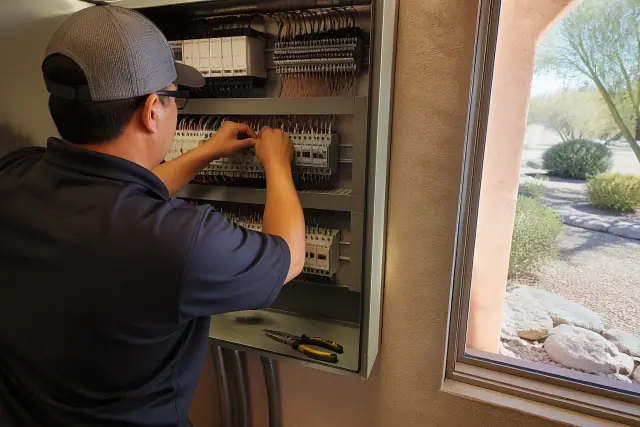
Technician wiring a building automation control cabinet with multicolored wires in a Phoenix, AZ office.

Building automation gives facility teams one interface for multiple rooftop units or multi-zone VRF equipment. Scheduling, demand-based ventilation, sensor calibration, and real-time alerts can reduce empty-building runtime and surface a stuck damper, drifting sensor, or compressor fault before comfort is lost.

Request Estimate
Equipment and Airflow

Commercial HVAC Equipment & Options

The right maintenance scope depends on how each equipment type moves heat and air, how accessible it is, and what a failure would interrupt. We match testing and service tasks to the installed RTUs, VRF zones, refrigeration equipment, ductwork, and ventilation systems rather than forcing unlike assets into one checklist.

Technician performing a seasonal HVAC maintenance tune-up on a commercial rooftop unit in Phoenix, AZ.

Rooftop Package Units

Package RTUs concentrate cooling, heating, airflow, electrical, and controls components on the roof, where Phoenix heat and debris add to their workload. Maintenance must address the unit and the roof interface together.

  • Manufacturer-approved condenser-coil cleaning
  • UV-damaged cabinet seal inspection
  • Curb-flashing and roof-penetration checks
  • Start-capacitor and contactor testing
  • Variable-speed and SEER2 replacement options for aging R-22 equipment
Request Estimate
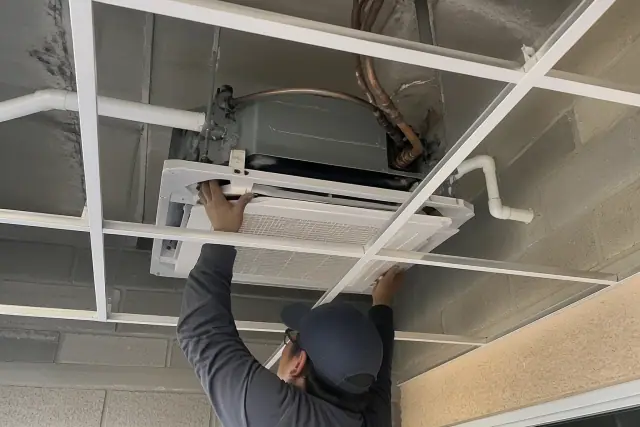
Technician installing a ceiling-cassette VRF unit in a drop ceiling during HVAC maintenance in Phoenix, AZ.

Variable Refrigerant Flow Systems

VRF equipment serves individual zones through shared refrigerant piping and manufacturer-specific controls. Accurate service requires piping knowledge, system-specific diagnostic tools, and the ability to isolate a zone fault without treating the entire building as one package unit.

  • Multi-zone performance checks
  • Manufacturer-specific fault-code diagnostics
  • Refrigerant-piping evaluation
  • Individual zone-control testing
  • Building-automation coordination
Request Estimate
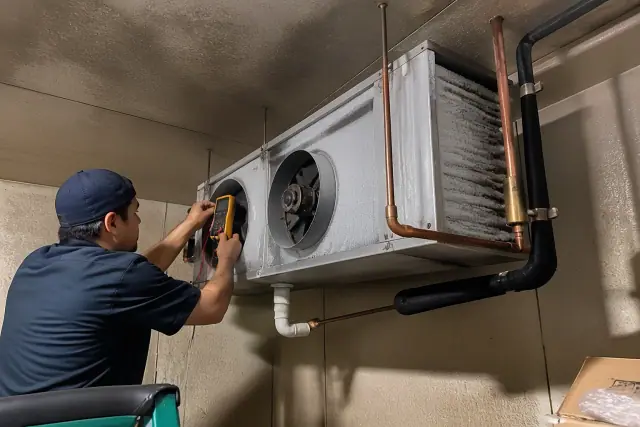
Mechanic testing a frosted evaporator coil in a commercial walk-in refrigerator in Phoenix, AZ.

Commercial Refrigeration Equipment

Commercial refrigeration shares many diagnostic principles with air conditioning but carries a different operational risk when stored products depend on stable temperature. Service can be included alongside HVAC so the same visit covers connected facility priorities.

  • Walk-in cooler service
  • Commercial freezer maintenance
  • Reach-in unit diagnostics
  • Electronic refrigerant leak detection
  • Compressor and condenser testing
Request Estimate
Sheet metal workers installing galvanized steel ductwork on a ceiling at a commercial job site in Phoenix, AZ.

Commercial Ductwork and Airflow

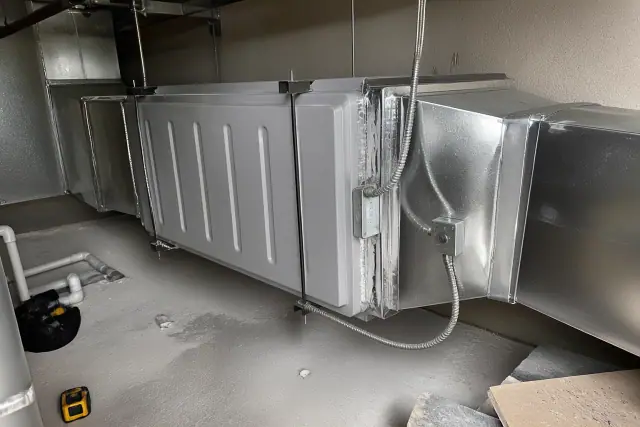
Ductwork condition and sizing determine whether conditioned air reaches the occupied space at the pressure the equipment was designed to deliver. Testing distinguishes an airflow restriction or leakage problem from a capacity problem at the unit.

  • Manual D static-pressure calculations
  • Supply and return airflow verification
  • Leak-reducing duct sealing
  • Attic and plenum loss assessment
  • Makeup-air balancing for kitchens
Request Estimate
Commercial air purification unit installed in industrial ductwork at a jobsite in Phoenix, AZ.

Indoor Air Quality and Ventilation

Commercial IAQ service addresses the interaction among outdoor dust, filtration, monsoon humidity, and required ventilation. The evaluation changes with occupancy and property use, from offices and retail spaces to hospital HVAC environments.

  • Dust-infiltration assessment
  • MERV-based filter planning
  • Humidity and drain-pan checks
  • ASHRAE 62.1 ventilation review
  • Thermostat and controls calibration
Request Estimate
Finding the Right Fit

Choosing the Right Maintenance Approach

A single-tenant retail space, a multi-tenant office, and an industrial property near Sky Harbor or the I-17 corridor do not carry the same equipment mix or service risk. We set the visit frequency and task list after reviewing system type, unit count, tonnage, roof access, occupancy, refrigeration or kitchen equipment, and the consequences of downtime.

Phoenix-Calibrated Maintenance

Service timing follows Phoenix operating conditions, including pre-summer preparation, sustained desert heat, blowing dust, monsoon moisture, and the return of heating demand. That local calendar directs attention to the components under the most stress before each season.

Standards-Based Technical Work

Our technicians work under Arizona Registrar of Contractors licensing and EPA Section 608 certification. Load calculations and duct design follow ACCA Manual N and Manual D protocols, while commercial maintenance planning is calibrated to ASHRAE 180 guidance.

Measured, Documented Service

We compare superheat, subcooling, compressor and blower amperage, refrigerant pressures, static pressure, thermostat calibration, and control sequences with the applicable specifications. Recorded readings create a baseline that supports trend-based maintenance instead of guesswork.

What Sets Us Apart

Why Phoenix Businesses Choose Us

Phoenix Commercial HVAC treats rooftop equipment, refrigeration, ventilation, controls, and airflow as connected parts of one facility system. A site assessment lets us identify the maintenance scope, document existing conditions, and separate routine tasks from repairs that require a written estimate.

Schedule Facility Assessment

Extreme Rooftop Heat

A rooftop unit can be operating in direct desert sun while outdoor conditions reach 112 degrees. Prolonged thermal load raises stress on compressors, electrical connections, gaskets, and cabinets, making pre-peak testing and clean heat-transfer surfaces especially important.

Dust-Restricted Airflow

Desert dust loads filters and coats condenser or evaporator coils, increasing static pressure and forcing blower motors to work harder. Filter condition, coil cleanliness, and measured airflow must be evaluated together before a comfort symptom is blamed on equipment capacity.

Low Refrigerant and Compressor Stress

Compressor repair calls rise in June and July when a low charge or marginal component meets full cooling load. We compare charge with pressure-temperature charts and use electronic sniffers or UV dye when leak detection is needed.

Worn Electrical Components

Heat-damaged connections, worn contactors, weak start capacitors, and abnormal amperage draw can stop otherwise serviceable equipment. Electrical inspection and measured motor or compressor draw reveal developing faults that visual checks alone may miss.

Monsoon Drainage Issues

Higher humidity during monsoon season adds moisture at evaporator coils and drain pans. Clearing condensate paths and inspecting pans helps prevent an airflow or cooling problem from becoming a ceiling, roof, or interior water issue.

Uneven Zones and Control Faults

A stuck damper, drifting sensor, schedule error, or VRF zone fault can create hot and cold areas while the central equipment still runs. Controls testing and register-level airflow verification help isolate the actual cause before mechanical components are replaced.

How It Works

Our Commercial HVAC Maintenance Process

The maintenance process moves from site context to measured equipment condition, preventive tasks, calibration, recommendations, and a repeatable schedule. Each step creates information the next visit can use.

01.

Facility Walk-Through

We review the property, equipment count, system types, roof access, occupancy, operating schedule, and any refrigeration or kitchen ventilation in scope. The walk-through establishes what downtime would affect and which assets need the closest attention.

02.

Equipment Baseline and Testing

Technicians record refrigerant pressures, superheat, subcooling, compressor and blower amperage, static pressure, thermostat response, and control-board fault codes as applicable. These readings show current performance and create a reference for future visits.

03.

Cleaning and Preventive Tasks

The visit can include coil cleaning, filter service, condensate clearing, belt and bearing checks, electrical-connection inspection, and contactor or capacitor testing. Tasks are matched to the installed equipment and its condition.

04.

Controls and Airflow Calibration

We verify control sequences, thermostat and sensor calibration, airflow at registers, and the effect of static pressure across the duct system. Automation schedules and demand-based ventilation are checked against actual occupancy hours.

05.

Findings and Repair Options

Conditions outside routine maintenance are documented before additional work proceeds. When an aging unit needs a major repair, we can apply the $5,000 rule as one decision aid and show both repair and replacement considerations.

06.

Maintenance Schedule and Records

We set the next interval using equipment age, run hours, criticality, occupancy, and filter-loading data. Service readings and startup information remain available as a maintenance reference so performance can be compared over time.

Plan Before Peak Load

Schedule a Commercial HVAC
Maintenance
Assessment

Request a facility assessment for a written maintenance scope based on your actual equipment, access, and operating needs. Phoenix Commercial HVAC can coordinate preventive service with rooftop units, refrigeration, controls, ductwork, ventilation, repairs, and replacement planning.

Maintenance Help

Commercial HVAC Maintenance FAQs

These answers cover service frequency, visit scope, pricing methods, repair-versus-replacement decisions, equipment types, and Phoenix operating conditions. Call to discuss the equipment and risk factors at your property.

Call About Maintenance

Most commercial systems in Phoenix need service at least twice a year: before summer cooling demand and before winter heating demand. High-occupancy buildings, restaurant kitchens, critical equipment, and refrigeration often benefit from quarterly visits, with the final interval based on equipment type and criticality under ASHRAE 180 guidance.

Multiply the unit's age in years by the estimated repair cost; when the result exceeds $5,000, replacement is generally worth considering. For example, even a $500 repair on a 12-year-old rooftop unit crosses that guideline, though refrigerant type, parts availability, warranty status, and overall condition still matter.

New commercial HVAC installations and major replacements must comply with the mechanical code adopted by the local jurisdiction and typically require a permit through Phoenix or the relevant municipal building department. Equipment must meet current Department of Energy efficiency requirements, refrigerant handling is governed by EPA Section 608, and restaurant grease-exhaust systems also fall under NFPA 96 and local fire-marshal inspection.

Phoenix commercial maintenance commonly runs $0.15 to $0.30 per square foot annually or about $300 to $600 per unit per year for a quarterly contract. Individual service calls typically start around $150; final pricing changes with unit count, tonnage, system type, roof access, equipment condition, and whether refrigeration or kitchen ventilation is included.

When an annual agreement is spread across 12 months, a standard quarterly plan typically works out to $25 to $50 per unit per month. Larger-tonnage units, refrigeration, and kitchen exhaust can raise that amount, while multiple RTUs may be bundled into one service agreement.

A standard visit can include coil cleaning, refrigerant-charge verification, electrical inspection, contactor and capacitor testing, belt and bearing checks, filter service, condensate-drain clearing, and thermostat or controls calibration. Static pressure and amperage readings are documented so changes can be tracked from one visit to the next.

Yes. Phoenix Commercial HVAC services walk-in coolers, freezers, and reach-in units alongside standard HVAC equipment, including compressor evaluation and refrigerant leak detection by EPA Section 608-certified technicians.

Phoenix rooftop units often reach the repair-versus-replacement decision around 10-12 years because heat, dust, UV exposure, and repeated cycling accelerate wear. Actual timing depends on equipment condition, refrigerant type, repair history, and whether the unit can still meet the building's load.

We use the filter's MERV rating, occupancy type, run hours, static pressure, and observed loading rather than applying one schedule to every building. Phoenix dust can require more frequent replacement than a blanket 90-day interval.

Commissioning verifies airflow at each register, refrigerant charge, thermostat response, and control sequences before an installation is handed over. Startup readings are documented as the baseline for future maintenance.

Automated schedules can reduce cooling during unoccupied hours, while demand-based ventilation adjusts operation to building use. Alerts can also identify a failing compressor, stuck damper, or drifting sensor before the issue becomes a full outage.

They can include restaurant HVAC, exhaust-hood cleaning, kitchen exhaust service, and makeup-air balancing. Service schedules account for grease-exhaust requirements under NFPA 96 as well as Maricopa County Environmental Services and local fire-marshal inspections.

Phoenix Commercial HVAC provides commercial maintenance throughout Phoenix, Tempe, Scottsdale, Mesa, Chandler, Glendale, and the broader Maricopa County metro area. The service scope can cover a single commercial unit or equipment across a portfolio of properties.